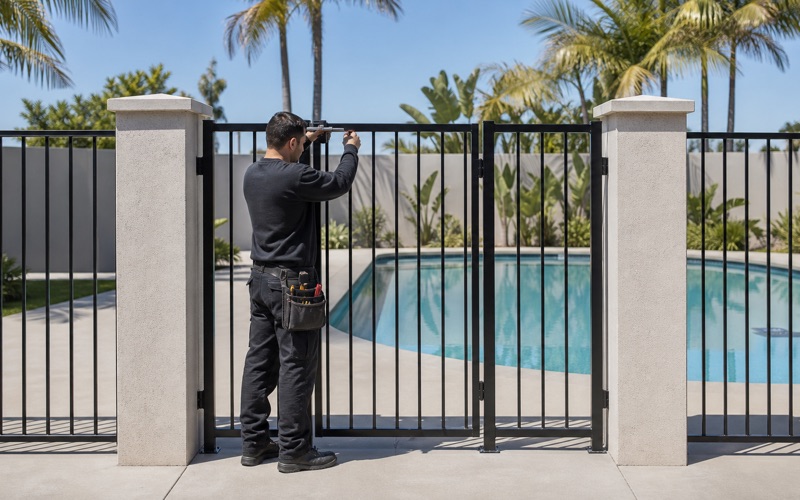
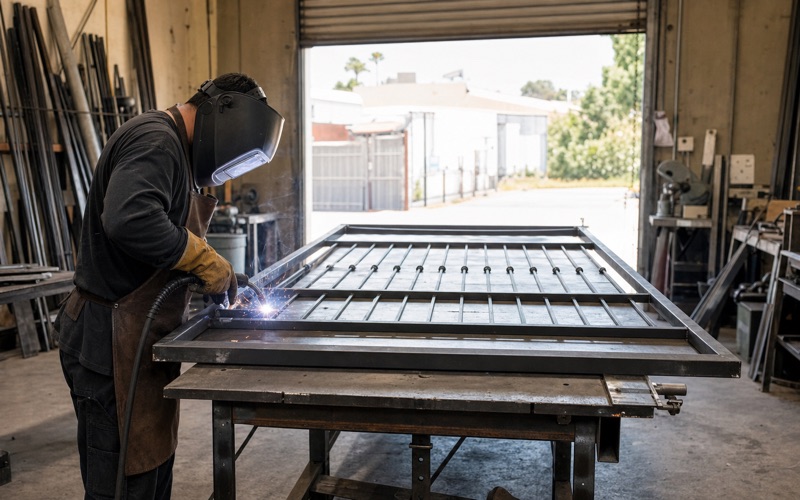
Whittier has genuinely old housing by Southern California standards, and that is what makes gate work here different. Paramount Metal Gates builds metal gates in Whittier for the period homes around the historic core, the hillside properties above it, and the ordinary suburban streets that fill the space between.
A gate on a 1920s bungalow or a Craftsman with original detailing is a design problem before it is a fabrication one. Most stock gate patterns were drawn for a generic contemporary elevation, and dropping one in front of a house with real period character reads immediately as wrong, in a way that costs the property something rather than adding to it.
The hillside half of the city presents a different problem entirely: driveways that climb, sometimes steeply, where the configuration that works on a flat street simply will not travel. Both sets of constraints are worth establishing before anything is drawn.
Period-Appropriate Ironwork
Reading the House First
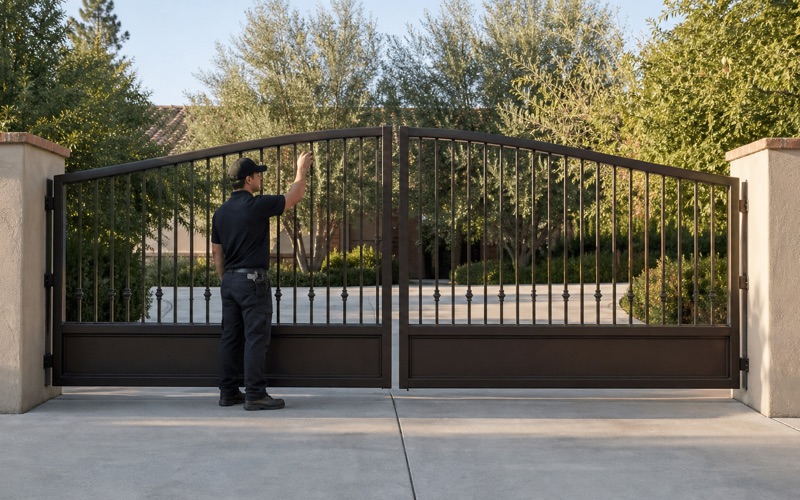
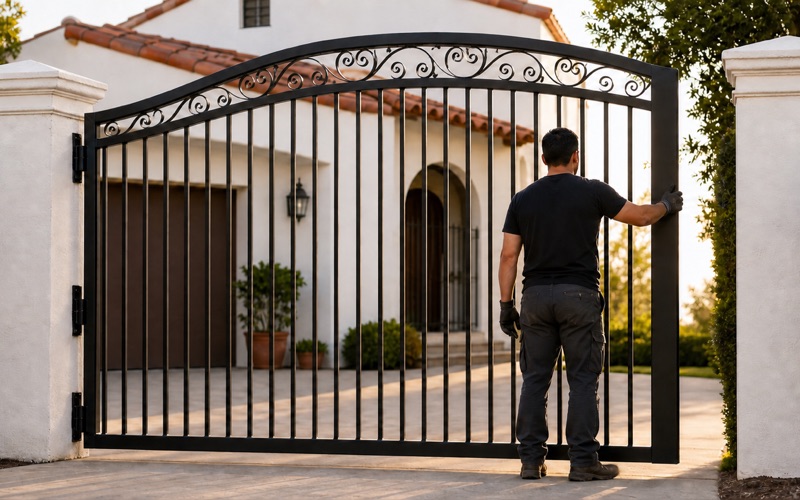
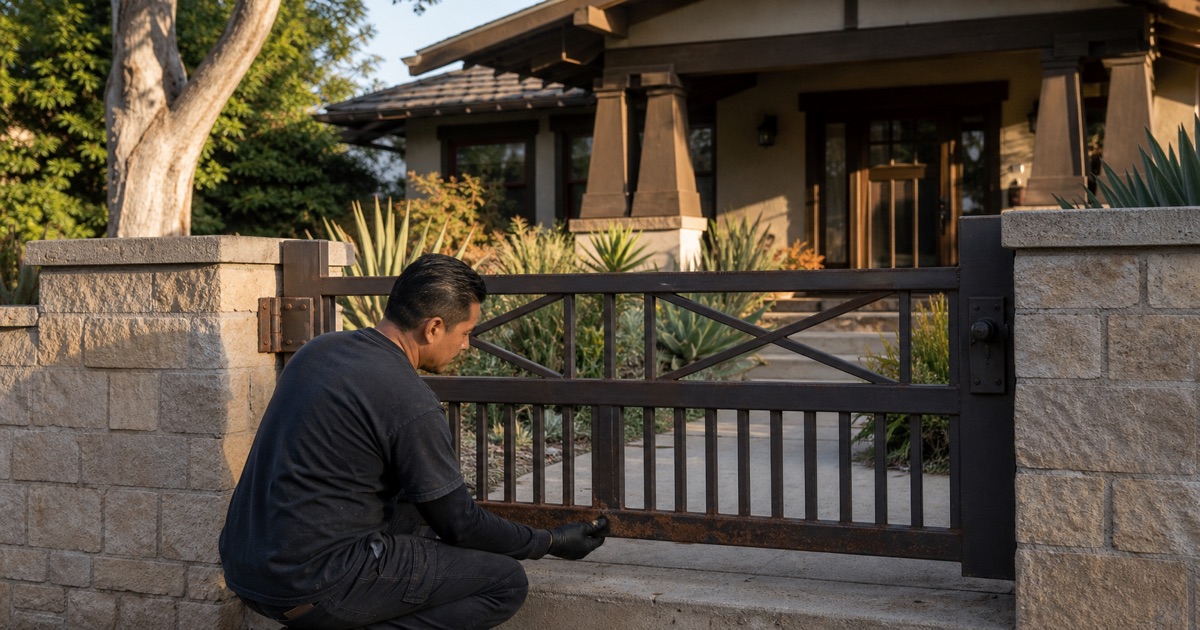
Before any pattern is proposed we look at what the house is already doing: the roofline, the porch detailing, the window proportions, the masonry and any original ironwork still present. Craftsman properties want restrained horizontal forms and cloud-lift shapes rather than scrollwork. Spanish and Mediterranean elevations take arched tops, iron strapping and clavos. Getting that match right is most of what separates a gate that belongs from one that was bought.
Matching Original Detail
Where original ironwork survives on a porch rail, a window guard or an older gate, it is the best available reference and usually worth reproducing rather than complementing. We measure and copy picket profiles, scroll forms, rail spacing and finish so new work reads as part of the original scheme. Where a profile is genuinely no longer available, we say so before fabrication and propose a deliberate complementary detail instead of an approximation.
Restoring Rather Than Replacing
Older ornamental gates are frequently worth saving even in poor condition, because the pattern above a corroded bottom rail is usually sound and reproducing it would cost far more than repairing it. We cut out failed steel, weld in new tube matched to the original section, treat the joints and refinish the whole leaf so the repair does not read as a patch. On period detailing, that is often the only way to keep something irreplaceable.
Restraint on a Historic Street
The most common error on an older street is too much gate. A tall, heavily ornamented leaf in front of a modest period house overwhelms it, and the result reads as expensive rather than appropriate. We tend to argue for lower, simpler and better-detailed rather than larger, and we would rather talk an owner down a size than build something that fights the house for the next thirty years.
Looking for metal gates closer to Lomita? See Metal Gates in Lomita.
Hillside Properties
Why Grade Rules the Configuration
Above the older core the ground climbs, and a driveway that rises from the street will catch a swinging leaf partway through its arc no matter how carefully the hinges are set. Raising the gate to clear the rise leaves a gap underneath that defeats the purpose. On a genuinely sloped approach the honest answer is a different configuration rather than a compromise on the same one.
Sliding and Cantilever on a Slope
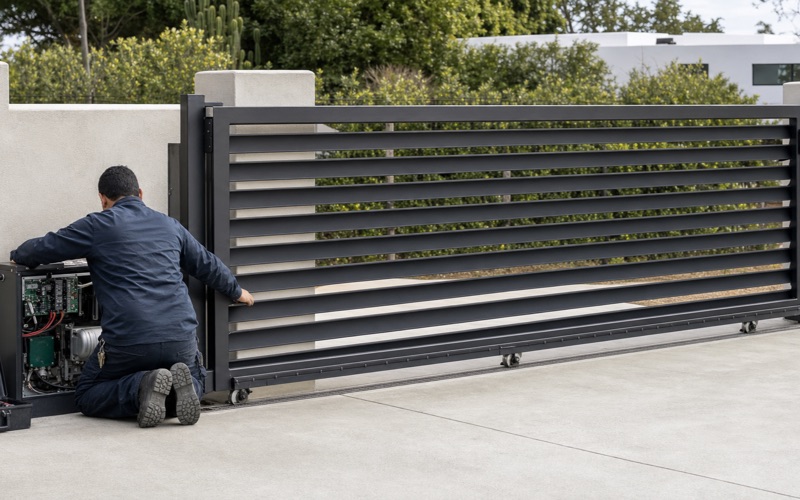
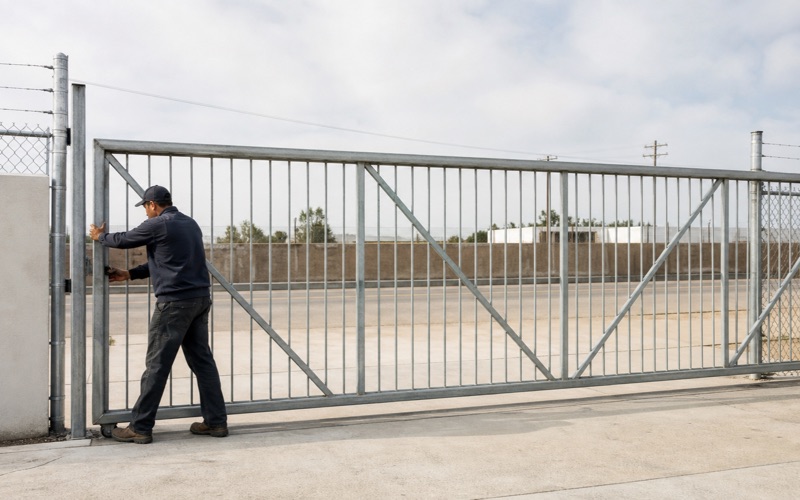
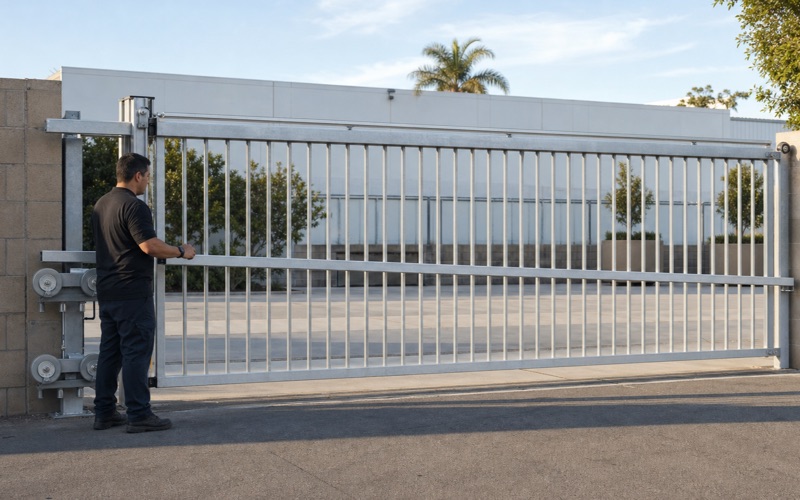
A sliding gate travels parallel to the opening and is indifferent to the fall, which is why it appears so much more often on the hillside streets. What it needs instead is a clear run alongside, which on a hillside lot may itself be on a grade or interrupted by a retaining wall. A cantilever removes ground hardware entirely but needs meaningful side room for its counterbalanced tail.
Retaining Walls and Anchorage
Older hillside properties frequently have walls of uncertain provenance: built at different times, by different hands, to no record anybody still holds. Before anything is fixed to one we establish what it actually is, because a wall that has stood untroubled for decades holding soil may have no capacity at all for the sideways load a gate applies every time it opens.
Drainage Down a Driveway
On a slope everything that falls on the driveway runs to the bottom of it, and a gate at the bottom stands in that flow. Bottom rails, footings and any ground track sit in the path of it. We set clearance and detailing with drainage in mind, because a leaf that spends every wet week in running water corrodes from the bottom regardless of what is specified above it.
Everyday Gate Work
Driveway Gates on the Flat Streets
Between the historic core and the hills, Whittier has a great deal of ordinary suburban housing. The work there is straightforward: establish what the driveway can take, choose the configuration on geometry rather than preference, and size the posts and footings so the gate stays true for decades.
Side, Rear and Pedestrian Access
Side gates matter on the deeper lots, particularly where a trailer or work vehicle is kept, and the recurring failure is a standard gate widened without reinforcement. We build wider leaves on heavier frames with real bracing and drop rods into ground sockets. Pedestrian gates take more cycles than anything else on a property and get closers sized to the actual leaf weight.
Security Doors on Older Buildings
Ornamental security doors and window guards on period housing have to be detailed with the same care as a gate, because a crude one ruins an elevation that survived a century. We fabricate to the opening and match detail to the building, and where a wall is stucco over frame rather than solid masonry, we anchor into the structural opening behind rather than relying on render.
Automation and Safety Sensing
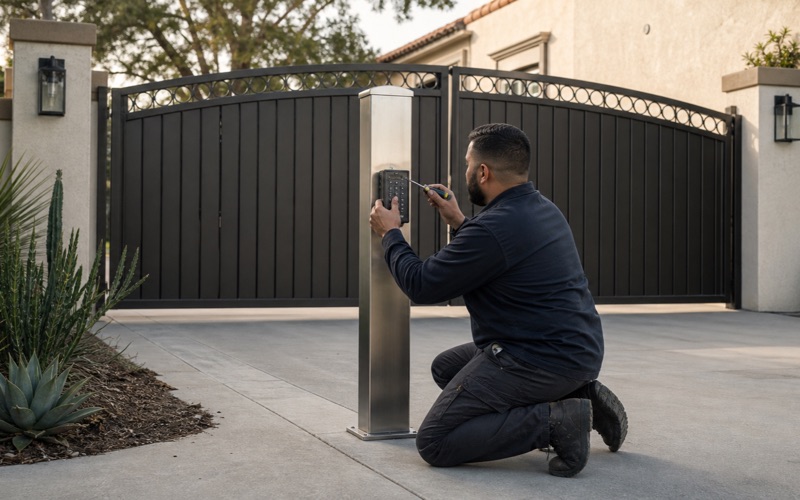
Automating original ironwork raises a question that does not arise on a new gate: whether the historic leaf should carry the load at all. Period gates were built to be pushed by hand and their joints were never designed for an operator working against them thousands of times. Sometimes the right answer is to automate a new gate and keep the original hung as a fixed decorative leaf beside it.
Approvals and Neighboring Areas
Height, Setback and Corner Sightlines
Height in the required front yard is limited, with a greater allowance behind the front-yard line, and corner lots carry a vision-clearance requirement at the intersection. Those limits are worth establishing before a design is drawn rather than after, because a period-appropriate gate built to the wrong height cannot be trimmed down without destroying the proportions that made it appropriate.
The Unincorporated Whittier Areas
The city is surrounded by four unincorporated areas sharing the Whittier name — West Whittier-Los Nietos, North Whittier, South Whittier and East Whittier — which together hold more people than the city itself. A property with a Whittier address is not necessarily inside the city, and the governing authority for permits and inspections differs accordingly, so we confirm which applies before submitting anything.
Historic Considerations
Where a property sits in an area with historic character, exterior work can attract more scrutiny than it would elsewhere, and a design prepared with drawings, dimensions, material and finish specified is far easier to progress than a verbal description. We prepare that documentation as a matter of course, since it is the same information we need in order to build.
Coastal Air This Far Inland
Ironwork that has already survived eighty or ninety years here did so because it was heavy section to begin with, not because the original finish was good. When we repair that material the temptation is to match the original coating, and we generally argue against it: putting a period-appropriate paint system back onto steel that has already corroded once simply schedules the same conversation for the next owner.
Whittier’s Character
An Old City by Local Standards
Whittier was incorporated in February 1898 and became a charter city in 1955, which makes it substantially older than most of its neighbors and explains the housing stock. It is named for the Quaker poet John Greenleaf Whittier and is home to Whittier College, and that long institutional presence is part of why the older core was kept rather than cleared.
The Uptown Core and the Hills
The historic Uptown district and the hillside streets above it are the two areas that most change what a gate needs to be, and they pull in opposite directions: one toward period detail and restraint, the other toward configuration and grade. A contractor working only from a catalog will get both wrong, in different ways.
Why the Age of the Stock Matters
Older buildings mean older ironwork, older posts, older footings and openings that were never standard to begin with. That is why so much of the work here is matching, repairing and rebuilding rather than installing something new on a clean frontage, and why measuring what is already there is the first step rather than a formality.
Working on a House Somebody Cares About
Owners of period property are generally more invested in the detail than owners of newer housing, and that is worth meeting rather than managing. We would rather spend an extra visit getting a profile right than deliver something quickly that an owner looks at for the next twenty years and quietly regrets. It also tends to produce a better gate, because a client who cares about the detail asks better questions than a specification sheet ever will.
- Licensed & Insured
- Free On-Site Measure
- Fixed-Price Quotes