
Paramount Metal Gates builds and repairs pool safety gates in Paramount, CA, covering new compliant barrier gates, hardware retrofits to existing gates, and the corrective work that comes out of a home inspection. A pool barrier gate is a specific piece of equipment rather than an ordinary gate placed near water, and the difference sits almost entirely in how it behaves when nobody is paying attention to it.
California’s pool safety requirements are built around that idea. An enclosure is expected to carry at least two of seven listed safety features, and a gate that is self-closing and self-latching, swings away from the pool and keeps its release at least 60 inches above the ground is one of them. The point of every one of those details is that the barrier restores itself without depending on somebody remembering to close it.
That requirement becomes urgent during a property sale. A home inspector who finds fewer than two of the listed features has to record it in writing, and that written finding lands in a report a buyer and their lender are both reading. Of the seven features, a compliant gate is generally the fastest to put right, which is why barrier gate work so often arrives with a deadline attached to it.
Compliant Barrier Gates
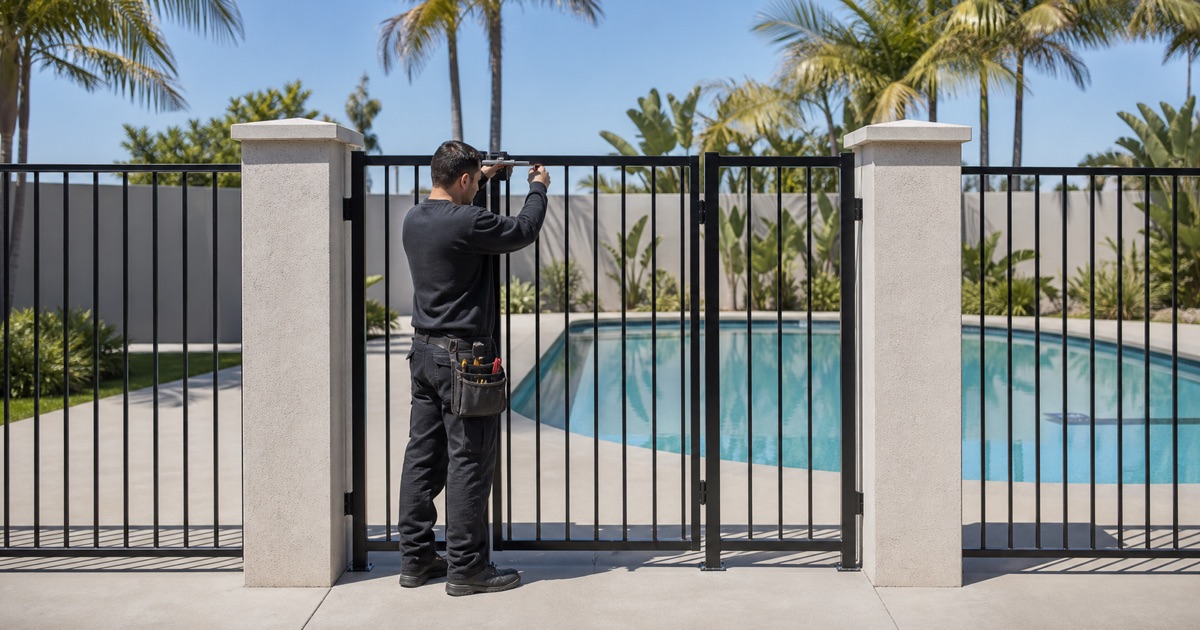
Self-Closing and Self-Latching Hardware
The hardware is what makes the gate compliant rather than the gate itself. Self-closing hinges, whether spring or hydraulic, have to return the leaf reliably from any open position and drive it far enough to engage the latch positively. We size closers to the actual weight of the gate, because a closer specified for a light aluminum leaf and fitted to a heavy steel one will move the gate most of the way and leave it resting against a latch that never catches.
Latch Height and Release Position
The latch release sits at least 60 inches above the ground so it is out of reach of a young child, and the mechanism has to work reliably from that height for an adult. Mounting position matters as much as the hardware: a correctly rated latch installed too low, or set where the gate has to be lifted before it will engage, fails the requirement in practice even when the parts are the right ones on paper.
Swing Direction and Gate Geometry
A pool barrier gate swings away from the pool, so that a child pushing against it is pushing it closed rather than open. Getting that wrong is one of the more common findings, and correcting it means re-hanging the gate rather than adjusting it. Ground clearance, gap width between pickets and clearance at the latch post all matter too, since a barrier a child can pass under or through is not a barrier.
Retrofits and Corrections
Bringing an Existing Gate Up to Standard
Most pool gates we are called to do not need replacing. The frame is usually sound and the failure is hardware: a closer that has weakened with age, a latch at the wrong height, or a gate hung to swing the wrong way. Fitting proper self-closing hinges, relocating the latch and re-hanging the leaf costs a fraction of a new gate and produces a barrier that genuinely behaves as required.
Fixing a Gate That Will Not Latch
A gate that needs a push to catch is a gate that has stopped being self-latching, and the cause is usually a frame that has racked or hinges that have worn and let the leaf drop. Adjusting the strike plate to meet the latch where it now sits hides that for a few weeks and lets the underlying droop continue. We correct the geometry, re-hang on properly rated hinges, and then set the latch to a gate that is actually square.
Inspection and Sale Deadlines
Work Driven by a Home Inspection
When a barrier finding appears in an inspection report there is usually a date attached to it, and the useful response is a gate that plainly meets the requirement rather than an approximate improvement. We look at what the report actually says, correct the specific deficiencies, and leave the barrier in a state that can be shown to satisfy them. Where more than the gate is deficient, we say so rather than implying gate work alone resolves the finding.
Maintaining Compliance Over Time
Closers are a wear item, and the way they fail is what makes them dangerous: gradually. A gate that closed firmly when installed begins closing slowly, then stops just short of the latch, then needs a nudge, and no single day marks the moment it stopped being compliant. Checking the closer and the latch periodically is a small task that keeps a barrier working as intended rather than only appearing to.
- Licensed & Insured
- Free On-Site Measure
- Fixed-Price Quotes