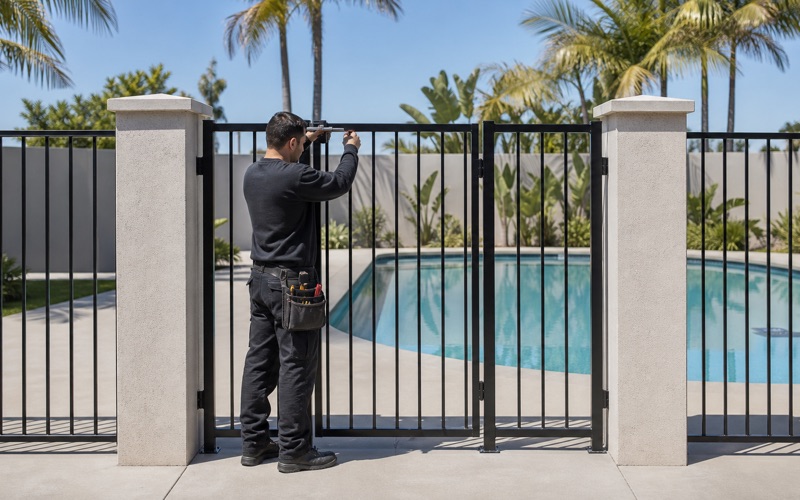
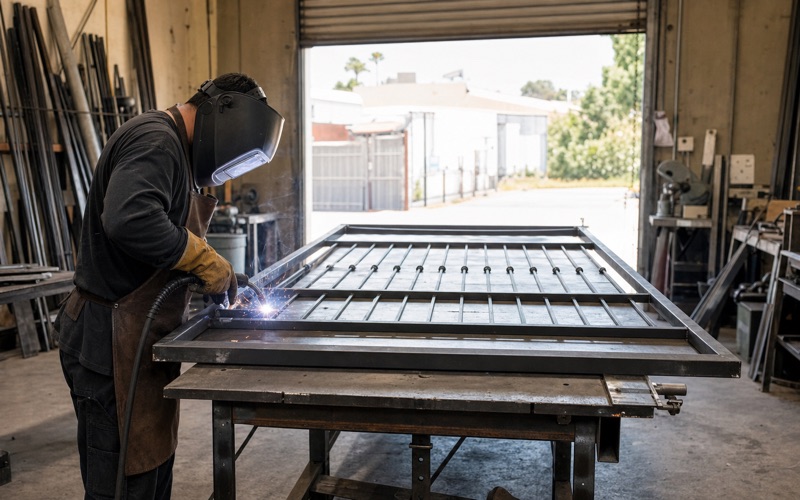
Paramount Metal Gates builds and repairs metal gates in Bell Gardens, covering driveway gates, security screen doors and window guards, side-yard and RV gates, and the operators and access control that go with them. Every gate is fabricated to a measured opening in our own shop, and every installation starts with what is under the gate rather than what will be visible above it.
That emphasis is deliberate here. Bell Gardens sits in the lower basin of the Rio Hondo on ground that was farmed for generations precisely because it was rich, damp and low. Soil that grows well holds moisture, and moisture is the enemy of both a gate post footing and the bottom of a steel leaf. A gate specified without accounting for that will be sound for a few years and then start moving and rusting from the ground up.
None of that makes the work difficult; it makes it specific. Footings sized and set for damp ground, galvanizing rather than paint at the base of a leaf, and ground clearance set so a gate is not sitting in standing water after a storm are ordinary decisions once somebody has made them deliberately.
Footings and Ground Conditions
Setting Posts in Damp Ground
A gate post carries its whole leaf as a cantilevered load, and how far it rotates over time is decided almost entirely by the footing beneath it. In softer, wetter ground a footing needs to be deeper and wider than the same gate would require on firm soil, because the surrounding earth offers less resistance to that rotation. We size against the finished leaf weight and the ground actually on site rather than pouring a standard hole, and we allow proper cure time before hanging anything.
Why a Gate Starts Dropping Years Later
The classic pattern here is a gate that hung correctly for several years and then began catching the driveway, which owners understandably read as a hinge problem. Usually it is not. A post whose footing has gradually rotated in soft ground moves a degree or two at grade, and that presents as several inches of drop at the latch. Correcting the hinge on a post that is still moving simply resets the clock, so we establish which of the two has failed before quoting either.
Ground Clearance and Standing Water
A gate that swings low looks neatly fitted on a dry day and sits in a puddle after rain, which is precisely where corrosion begins. We set ground clearance with drainage in mind rather than purely for appearance, so the bottom rail is not resting in standing water for days after a storm. Where a driveway falls toward the gate, that clearance decision matters far more than the finish specification does.
Reusing Existing Posts and Pilasters
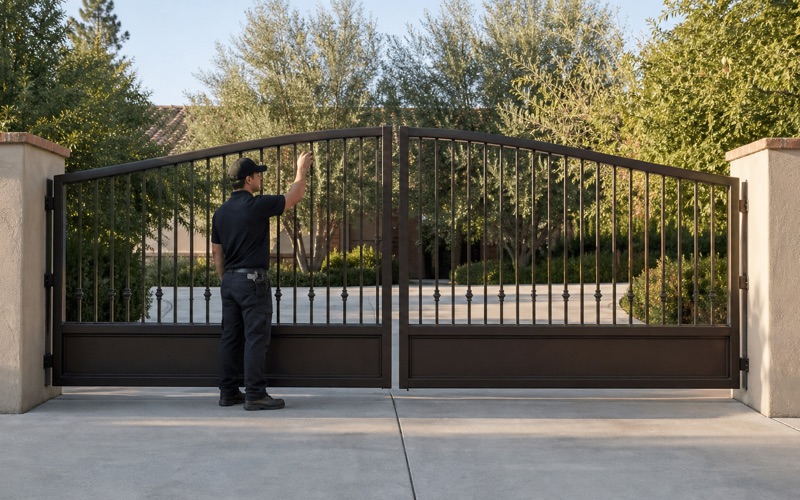
Many properties already have posts, a front wall or masonry pilasters, and whether those will carry a new gate is the first question rather than a detail. We check for rotation, for cracking at the base, and for whether the original footing suits the weight now being hung. Where a legacy post is marginal, replacing it during the same visit costs a fraction of returning to it after a new gate has started to sag against it.
Looking for metal gates closer to Cudahy? See Metal Gates Services in Cudahy.
Corrosion Protection
Where Rust Actually Starts
Rust does not begin in the middle of a picket. It begins at welded joints, where coating ends up thinnest, and along the bottom rail, where water sits longest. That is why we treat every weld with zinc-rich primer before any topcoat goes near it, and why the bottom of a leaf gets the same attention as the visible face. A gate that fails does so from those two places almost without exception.
Galvanizing and Powder Coating
Over the primer we specify hot-dip galvanizing or a TGIC polyester powder coat applied to properly pretreated steel. Galvanizing is the stronger answer wherever a gate is close to damp ground, because the zinc continues protecting the steel around a scratch rather than allowing corrosion to creep under the coating. Powder holds color and gloss under UV far longer than wet paint and resists the chalking that ages a gate visually long before it fails structurally.
Aluminum Where It Makes Sense
Aluminum extrusion will never corrode from the inside out, which is a genuine advantage on low ground, and it weighs a fraction of steel so it loads posts and footings far less. That combination is worth considering seriously where the ground is soft and the existing posts are being kept. It costs more per foot and dents more easily, so we specify heavier wall sections where vehicles maneuver close and we are clear about the trade rather than presenting it as a straight upgrade.
Repairing a Corroded Bottom Rail
A gate with a rusted-through bottom rail is very often worth saving, because the pattern and frame above it are usually sound. We cut out the failed steel, weld in new tube matched to the original section, treat the joints and refinish the whole leaf so the repair does not read as a patch. Painting over a section that has already perforated achieves nothing except delaying the same conversation by a season.
Driveway, Security and Side Gates
Driveway Gates on Compact Frontages
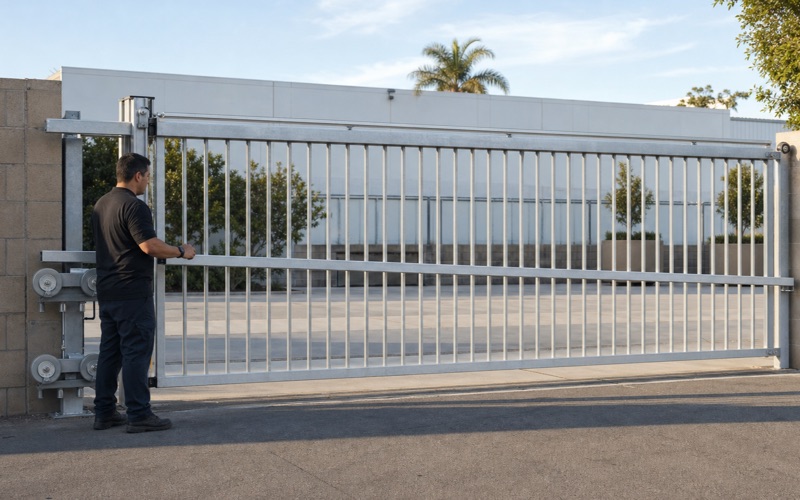
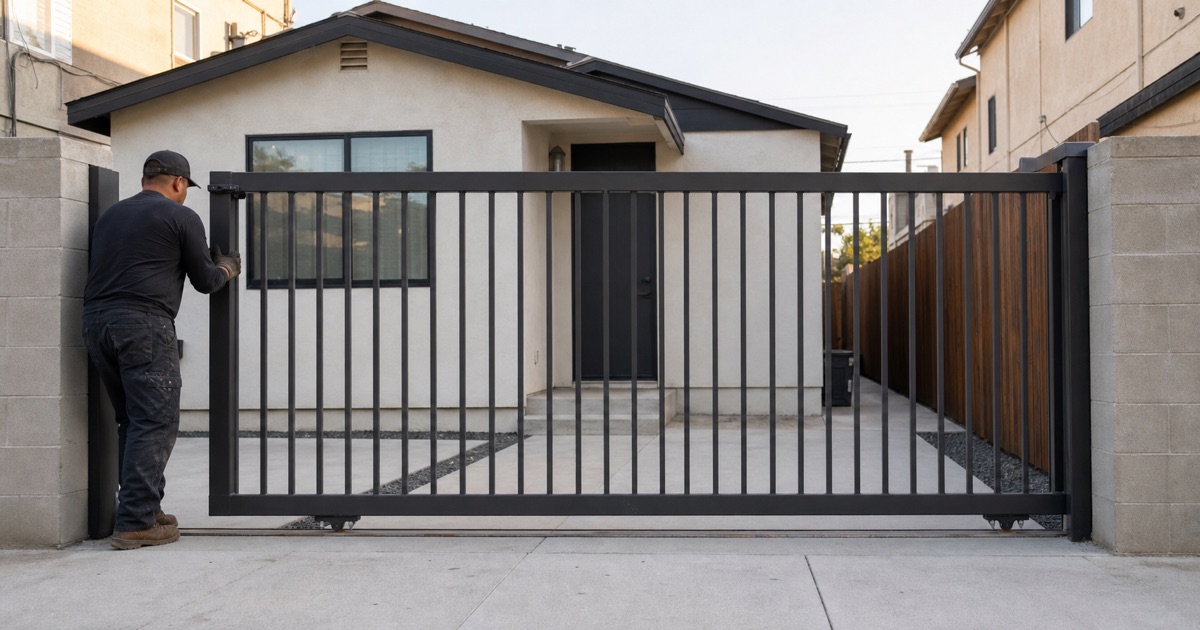
Bell Gardens’ residential frontages are compact, with limited depth between the sidewalk and the house, which constrains configuration before any style question arises. A swing leaf needs arc room the driveway may not have. We measure the usable depth and the fall, and where an inward swing would catch a parked vehicle we specify a sliding gate rather than forcing a swing into a space that cannot accept it.
Anchoring Security Ironwork Into Older Walls
Security doors and window guards are only as good as what holds them, and on the older housing here that is frequently stucco over a frame rather than solid masonry. Fixings driven into render alone will pull out under load, and where damp has reached a wall they will corrode from behind long before anything is visible at the surface. We locate structural members before drilling, use fixings specified for the actual substrate, and isolate dissimilar metals so the anchorage does not become the first thing to fail.
Side-Yard and RV Gates
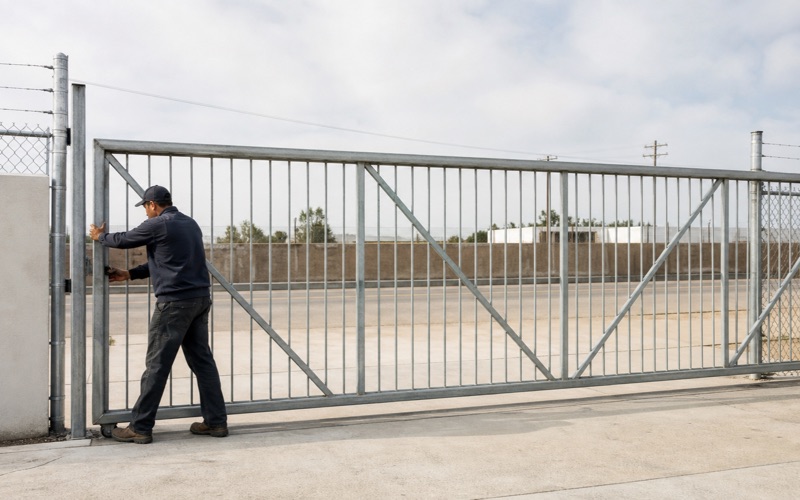
Lots that run deep behind the house make the side-yard gate genuinely useful, particularly where a trailer or work vehicle is stored. The common mistake is widening a standard gate without reinforcing it, which produces a leaf that drops out of square within a season. We build wider gates on heavier frames with real diagonal bracing and drop rods into ground sockets so the inactive leaf is fixed rather than relying on a latch to resist wind.
Automation and Sensing
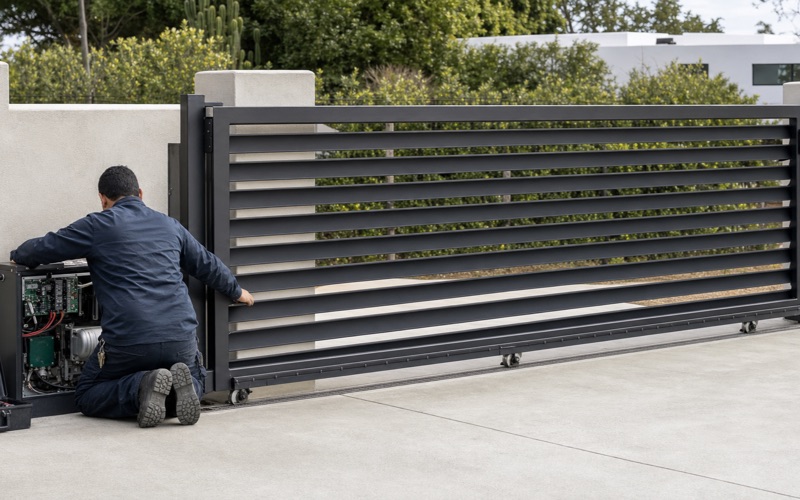
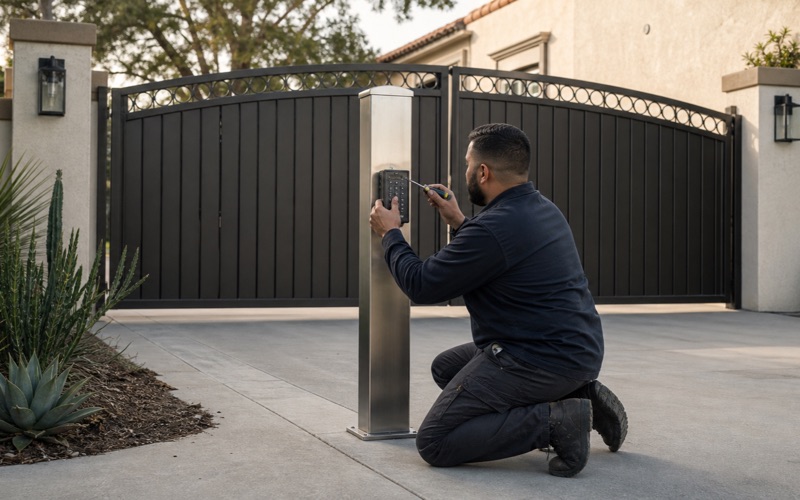
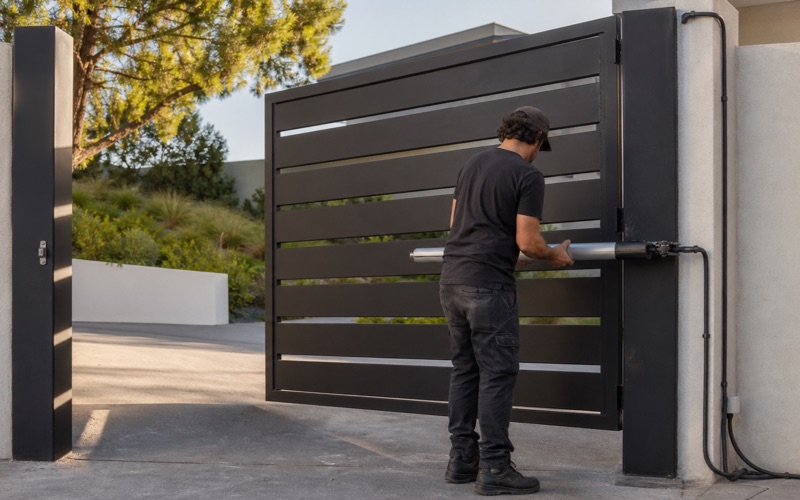
Automating a gate turns it into a powered machine, and the construction and safety requirements that apply to automated gates take effect at that moment. We size operators against the real leaf weight and cycle count, fit monitored entrapment protection with photo eyes and safety edges, and seal loop cuts properly, because a loop that has taken on water in low ground produces intermittent behavior that looks convincingly like an operator fault.
Bell Gardens Ground and History
Farmland in the Rio Hondo Basin
The land here sits along the lower basin of the Rio Hondo and carried some of the richest agricultural soil in the country, farmed intensively into the 1930s, with Japanese immigrant families among those who worked it. That agricultural past is not decoration on a gate page; it is the direct explanation for the ground conditions that shape how a gate has to be footed and finished here.
From Farms to Residential Streets
When the farmland was subdivided into residential streets, the lot pattern that resulted gave the compact frontages and deep rear yards that define gate work in the city today. The houses changed; the ground did not. A gate installed on a former field is standing in the same soil that made the field valuable, and specifying for that is simply taking the site seriously.
Coastal Air on Top of Damp Ground
Bell Gardens is also close enough to the coast for salt-laden air to reach welds and fixings, which compounds rather than replaces the ground-moisture problem. A gate here is exposed from below and from the air at the same time, which is the argument for galvanizing over paint and for treating every weld before finishing rather than relying on a single topcoat to do all the work.
Keeping a Gate Sound Over Time
What Is Worth Checking Seasonally
Most gate failures announce themselves long before they stop the gate, and on damp ground the early signals are specific: a leaf that has begun brushing the driveway at one corner, surface rust breaking through at the bottom rail, or a post that no longer feels solid when pushed. Catching any of those while it is still a hinge adjustment or a spot repair is the difference between an hour of work and a rebuild.
Drainage Around the Gate Line
Where water collects along a gate line it will find the bottom rail and the base of the posts, so the cheapest corrosion protection available is usually not a coating at all but making sure water leaves. We look at where the driveway falls and where runoff actually goes during the site visit, and say plainly when a gate is being asked to stand in a place that drains poorly, because no finish specification fully compensates for a leaf sitting in water.
Re-Setting a Post Properly
When a post has genuinely moved, the honest answer is to reset it rather than to keep adjusting the gate that hangs on it. That means excavating, sizing a new footing to the leaf weight and the ground, and allowing it to cure before anything is rehung. It is more disruptive than a hinge adjustment and it is the only repair that actually ends the problem rather than deferring it another season.
Loop Cuts and Sealant on Damp Ground
Inductive loops cut into a driveway are sealed for a reason, and on ground that stays damp that seal is doing real work. A loop that has taken on water reports vehicles that are not there and misses ones that are, producing intermittent gate behavior that looks convincingly like an operator fault and sends people shopping for a new motor. We cut, seal and tune loops properly and re-seal them when they start misbehaving.
- Licensed & Insured
- Free On-Site Measure
- Fixed-Price Quotes